Vaasa-based Mia Wiik and Mari Omars awarded the Finnish performing arts Gold Medals of Honour
Published on
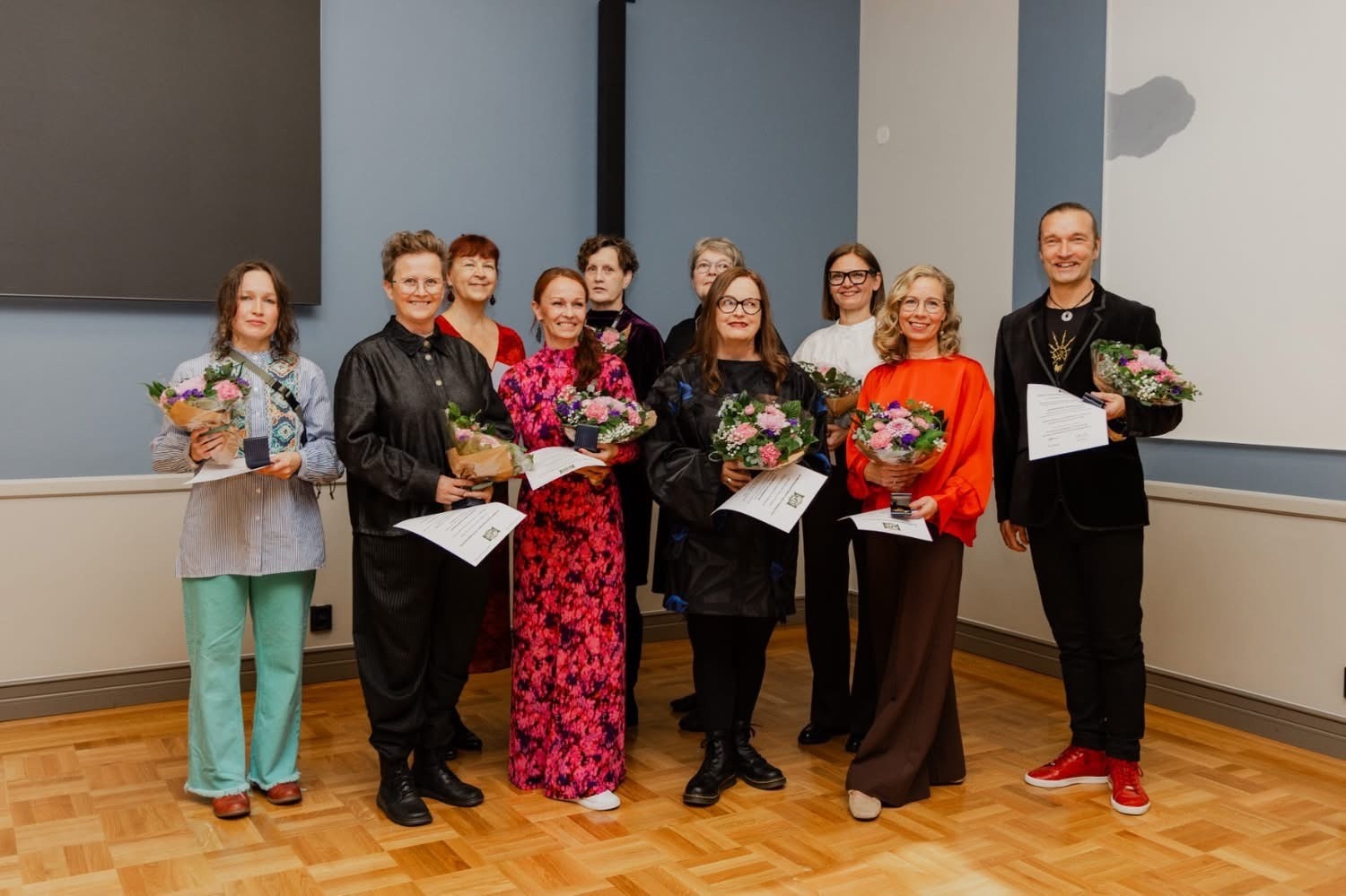
Dance educators and dance professionals Mia Wiik and Mari Omars have been awarded the Finnish performing arts Gold Medals of Honour with violet ribbons by the Central Association of Finnish Theatre Organisations. The medals were presented on 9 September 2026 in connection with Kiertoliike, the national professional forum of Finland’s regional dance centres.
A lifetime of work and long-term advocacy for dance and the performing arts in Ostrobothnia has received significant recognition. The Central Association of Finnish Theatre Organisations has awarded distinguished medals of merit and honour to long-standing contributors to the arts and cultural sector. The honours recognise individuals whose work has helped build the structures of Finnish dance, promoted employment in the field, improved regional accessibility and arts education, and created new forms of international and multidisciplinary artistic collaboration.
Since 2024, Finland’s network of regional dance centres has nominated experienced professionals working in the independent dance sector for these distinctions. The medals were presented on Thursday, 9 September 2026, at a reception hosted by the City of Oulu during Stretch Further and Kiertoliike 2026, an event bringing together the international professional dance community and Finland’s network of regional dance centres. The event is part of Oulu’s European Capital of Culture year.
The Gold Medal of Honour with a violet ribbon is awarded for exceptionally distinguished contributions to the advancement of local performing arts and theatre. The medal is awarded by unanimous decision of the Board of the Central Association of Finnish Theatre Organisations.
Pioneering work for professional dance in Ostrobothnia
Wiik and Omars have carried out sustained and pioneering work to strengthen the position of professional dance in Ostrobothnia and to establish the Regional Dance Centre of Ostrobothnia. As early as the beginning of the 2000s, they played a key role in efforts to create a permanent operating environment for professional dance in Vaasa and across the wider Ostrobothnian region. At the time, the region lacked both a shared organisation and established structures for professional dance.
When the first application for regional dance centre status was unsuccessful, Wiik and Omars continued their determined efforts and in 2006 founded WATT – Waasan alueen tanssitaiteilijat ry, an association for dance artists in the Vaasa region. WATT became an important platform for collaboration between dance artists, productions and new ways of working. The association produced at least two dance works a year for eight years and built a collaborative network connecting Vaasa, Seinäjoki and Kokkola, as well as the three Ostrobothnian regions. At the same time, Wiik and Omars continued actively working towards securing regional dance centre status.
– We were closely involved in the dance community throughout Ostrobothnia, so we knew all the dance professionals and organisations operating in the region. Even then, Ostrobothnia had a wide range of dance activities: events, networks and education, the travelling Ostrobothnia dances event, which was held in different locations in different years, as well as summer dance camps and networking meetings for professionals. The existing network of dance educators provided a strong foundation for the work of exploring and preparing the establishment of a regional dance centre, Mari Omars and Mia Wiik explain.
As a result of years of work, the Regional Dance Centre of Ostrobothnia began operating in 2010. Its mission was to develop dance in Ostrobothnia, South Ostrobothnia and Central Ostrobothnia and, among other things, to strengthen employment and working opportunities for artists, performance activities, audience engagement and regional collaboration.
Long and diverse careers in dance and the performing arts
Mia Wiik has worked as a dance educator in Vaasa since 1997 and has taught both contemporary dance and classical ballet at various levels of education throughout her career. Wiik holds a Bachelor’s degree in Dance from Danshögskolan in Stockholm and a Master’s degree in Education from Åbo Akademi University. She has also worked as a professional dancer and choreographer. Since 2021, she has served as Deputy Principal of Vaasa Adult Education Centre Alma, while continuing to be responsible for basic education in the arts at TaiKon.
– At first, the most important thing was to bring people together, have extensive discussions and develop ideas collectively. We needed to show everyone that there really was both an audience for dance in this region and skilled professionals capable of creating it, Mia Wiik says of their work to develop the structures for dance in the region.
Mari Omars graduated as a dance teacher from Oulu Conservatory in 1995. She taught children’s dance and ballet in Vaasa and elsewhere in Ostrobothnia from 1995 to 2012 and worked as a producer for WATT from 2006 to 2016. Omars subsequently continued her career at Vaasa City Theatre, first as a sales assistant and, since 2018, as Sales Manager.
– Through WATT, we organised, among other things, a major 32-performance tour in Finland and Sweden with the production Pinocchio, created in collaboration with Wasa Teater. Both of us also continued our pedagogical work alongside our other activities in dance. There certainly was no shortage of things to do!, Omars adds.
The significance of Wiik and Omars’s work extends far beyond individual productions and organisations. Their efforts brought together dance artists, municipalities, cultural organisations and other partners at a time when many of the structures and professional practices for dance in Ostrobothnia had to be built from the ground up. This network helped create a strong foundation for the regional dance infrastructure that exists today.
—
Category:
Uutiset